
Our team coordinators received call from RCC on Saturday 21st February at 3.14pm (Matt & Jason take the call – Matt is Operations Supervisor).
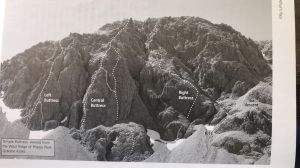
A party of four on two ropes was climbing Temple Buttress. Mid-way up the route, the climber takes a lead fall approx. 15 metres above the belayer, pulling out one piece of protection (cam), with the second piece holding firm despite the climber falling below the belayer. The belayer holds the serious fall. The climber is clearly injured. The other climbers in the party activate their PLB, then also phone police on 111.
The climber was climbing through a difficult section and pulled a rock loose with his hand; the last piece of protection was in his words ‘sketchy’.
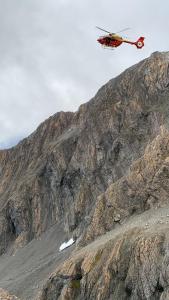
A Garden City Helicopters (GCH) helicopter travels from Christchurch to the site, does a flyover and clarifies that a specialised cliff rescue team is required. The injured climber is able to take calls with RCC and police, is able to update them on his condition, the area for rescue and weather. This intel proves invaluable for planning the rescue.
There is initial confusion about the exact location of the patient, with some PLB coordinates placing the patient on Phipps Peak. Fortunately the patient has mobile reception and can clarify their precise position with police which is passed on to GCH and our team.
Winds are strengthening NW and cloud increasing, with evening twilight approaching.
Simon & Jason first to respond, deployed to GCH immediately, arrive at GCH at 4pm; Alastair & Zach as second team if required, deployed to GCH.
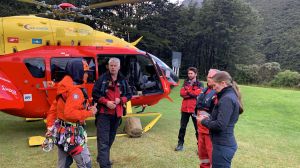
Our team packs for various scenarios, unsure of specifics at first but get clarification after the GCH heli does flyover. Given the forecast, we pack for the possiblity of spending a night out on the mountain with the party of 4. They fly up in second heli, meets first heli at Arthur’s Pass staging area.
After briefing with crew, team transfers to winch-capable Westpac Rescue heli (ZK-IGI) and goes to scene.
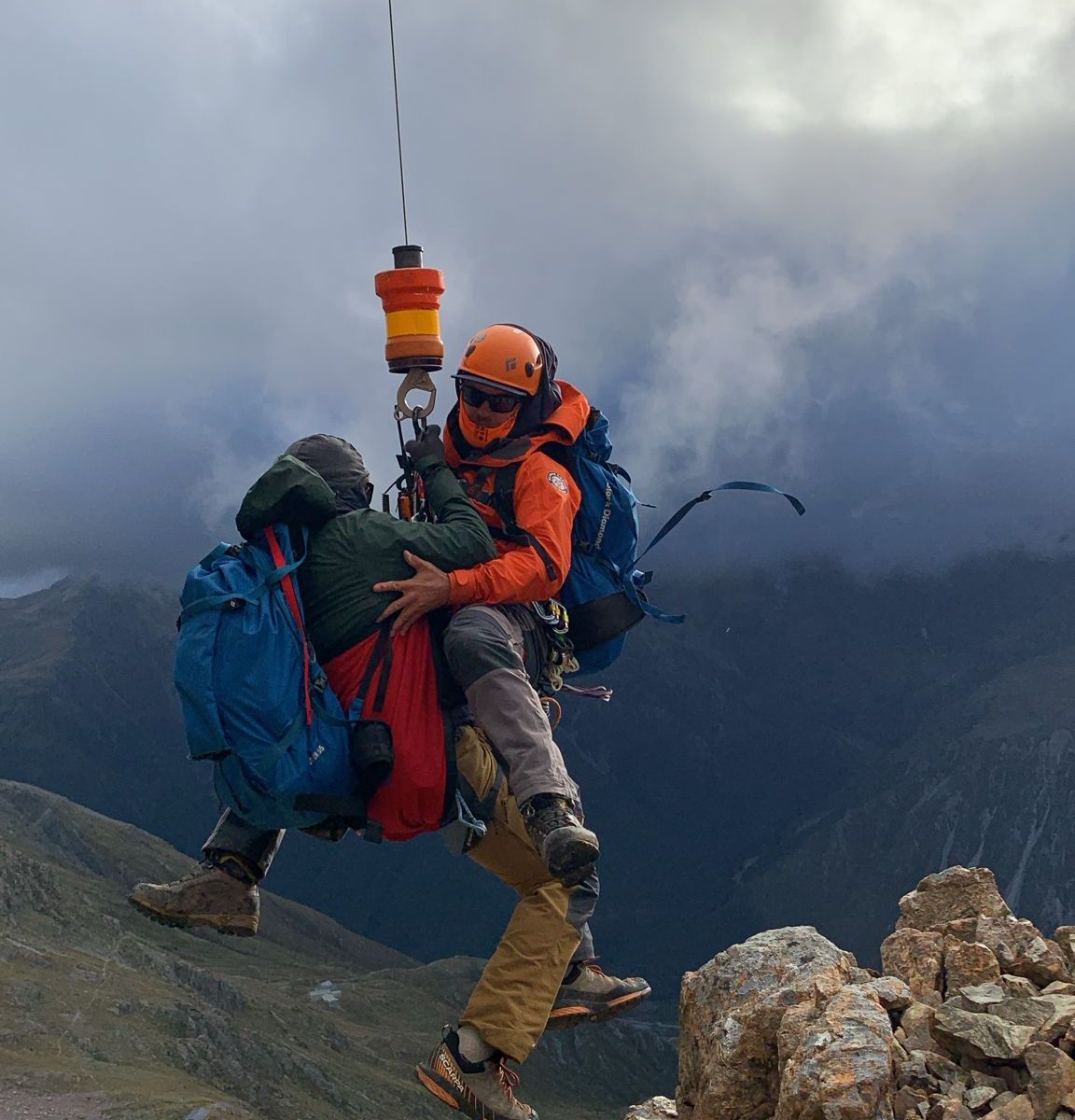
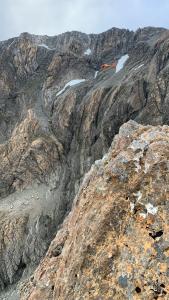
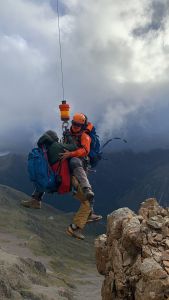
At 6.15pm both team members are winched down to the two climbers, where one is injured. They are anchored to rock face and in a relatively secure location, on a ledge and accessible to the heli winch. Heli comes in very close to rock face, and this is a challenge with strengthening winds.
While the heli returns to the staging area, the team secure themselves, then lower the injured climber to a ledge approx. 15 metres below where they were found. The team and climber are secured there, and radio the heli crew to return for extraction.
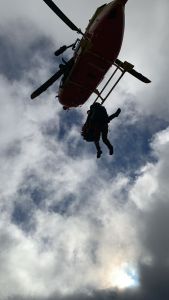
The heli returns and extracts the three (on two winch extractions) shortly after 7pm, returning to Arthur’s Pass village, and then the patient is transferred to Christchurch Hospital. The team leaves Arthur’s Pass at 7.30pm.
The patient considers himself extremely lucky with the outcome, discharging several days later from hospital with a compression fracture of thed T12 vertebra and some minor cuts and bruises. He is fortunately in not too much pain and has fairly good mobility.
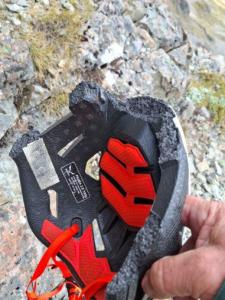
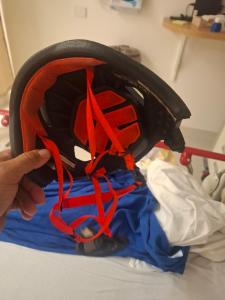
Have a look at the picture of the damaged helmet. It is quite clear that this helmet saved this person’s life.
Always wear a helmet in alpine terrain and be extra cautious when climbing on loose rock – we all know how temperamental our rock can be at times. Fortunately, the consequences were not worse in this incident.
 Alpine Rescue Canterbury